Showing posts with label research. Show all posts

Thursday, August 5, 2021

My Top 100 book as a jazz of numbers

Sequential Experiments with Primes got into the 100 Best Number Theory Books of All Time @ https://bookauthority.org/books/best-number-theory-books As an undergraduate college faculty member, I am happy. Thank you! :-)

I believe the attractiveness of the book lies not only on the novelty of certain ideas, but also in the style in which said novelty is attained. It's a sort of "jazz" with numbers (unfolding as a sustained creative piece not unlike the free development of a jazz gig).  A jazz with no particular rigid/studied reverence to other established theoretical approaches. Just free self-sustained jazz discovering new facts. In its way, it's structured as a sort of "dessins d'enfants" leading to a different look on the mystery of prime numbers.

Monday, June 16, 2014

Joint Statistical Meetings Proceedings - not peer-reviewed

"If you give a presentation at JSM, you may submit a corresponding paper to be published in the conference proceedings. Papers are not peer-reviewed in the same manner as for journals, but authors are encouraged to have others examine their paper before submission. The proceedings are published online around November. Authors retain the right to publish their research later in a peer-reviewed journal."
SOURCE: "What Happens at JSM Should Not Stay at JSM / How to get the most out of the Joint Statistical Meetings"  AMSTAT News - May 2014
http://magazine.amstat.org/wp-content/uploads/2014/02/AN_May2014.pdf

Thursday, May 22, 2014

Eu si... Antonin Scalia

Pe o scara personal/academica, momentul cel mai interesant al anului care a trecut a survenit atunci cind am fost comparat (la o conferinta, deci in public) cu... Antonin Scalia (!). Intentia nu a fost magulitoare, iar motivul fiind inistenta mea pe cercetarea intreprinsa de profesori, (nici vorba de "publish or perish" la un 4 years college, insa macar "publish involving undergraduates" - pentru un 4 years college ar fi minunat). Insistenta mea a trezit reactii mixte: unii s-au bucurat ("it's about time!"), altii au subliniat ceva in genul "teaching is paramount" (so?... does this exclude engaging students in research?), altii au fost relativ ostili, negind orice rol special acordat publicatiilor cu sau fara studenti co-autori. In sfirsit, ma bucur ca macar aceasta atitudine i-a pus pe ginduri pe unii.

Wednesday, February 26, 2014

Monday, December 2, 2013

An analogue of the Proth-Gilbreath conjecture (new paper)

O fenomenologie a numerelor prime - in gen fantasy cu demonstratii plus "experiment" (computer).

Far East Journal of Mathematical Sciences (FJMS)
Volume 81, Issue 1, Pages 1 - 12 (October 2013)
AN ANALOGUE OF THE PROTH-GILBREATH CONJECTURE 
Mihai Caragiu, Alexandru Zaharescu and Mohammad Zaki
Communicated by Juliusz Brzezinski


Sunday, September 29, 2013

Miami University Fall Conference on Undergraduate Research in Mathematics

Abstract of my presentation:

More than twelve years ago, a talk on "Ducci games" delivered jointly by two Ohio Northern University students at the 2001 Ohio MAA Spring meeting initiated a fairly long streak of undergraduate research in the area of number theory at our school. Since then, Ohio Northern University students presented 40 talks and posters in the broad area of number theory at various mathematics meetings, and were co-authors of 11 research articles in number theory which appeared in peer-reviewed mathematics journals. We were especially pleased to see our research on "greatest prime factor sequences" (published in Fibonacci Quarterly in 2010) featured alongside other "noteworthy variations on the Fibonacci numbers" in the keynote talk at the 15th International Conference on Fibonacci Numbers held in Budapest (June 25-30, 2012), and cited in various other journals. In the light of the speaker's experience as an undergraduate research advisor, we will try to address some issues of interest regarding the impact of undergraduate research in the outside mathematical community. This "impact" may be viewed as a long-sought fulfillment or closure of the combined efforts of faculty and students engaged in undergraduate research, which ultimately takes a life of its own. We will explore open-ended difficult questions such as: What does it mean to make an impact? Are there specific strategies for smaller schools? Can presentations make an impact? What is the relationship between undergraduate research and faculty research? Is it harder for pure mathematics?

Tuesday, August 6, 2013

Alba Iulia 2013

My talk (abstract) at the 2013 RMS-AMS Special Session of Discrete Mathematics and Theoretical Computer Science in Alba Iulia:
Uniform distribution for a class of k-paradoxical oriented graphs 
By using estimates for incomplete character sums with polynomial arguments, we provide uniform distribution results for the dominating sets in a class of k-paradoxical regular oriented graphs, including the Paley tournaments. Moreover, we will explore a method of quasi-random tournament generation from fi nite sets of natural numbers, by using the greatest prime factor function.

Thursday, July 18, 2013

Work on Stirling numbers honored with an Allendoerfer Award (2013)

Khristo N. Boyadzhiev (Ohio Northern University) - 2013 Carl B. Allendoerfer Award for the paper "Close Encounters with the Stirling Numbers of the Second Kind" - Mathematics Magazine, 85:4 (2012), pp. 252-266.
More at: http://www.maa.org/news/2013-maa-awards-recipients-announced

Friday, December 28, 2012

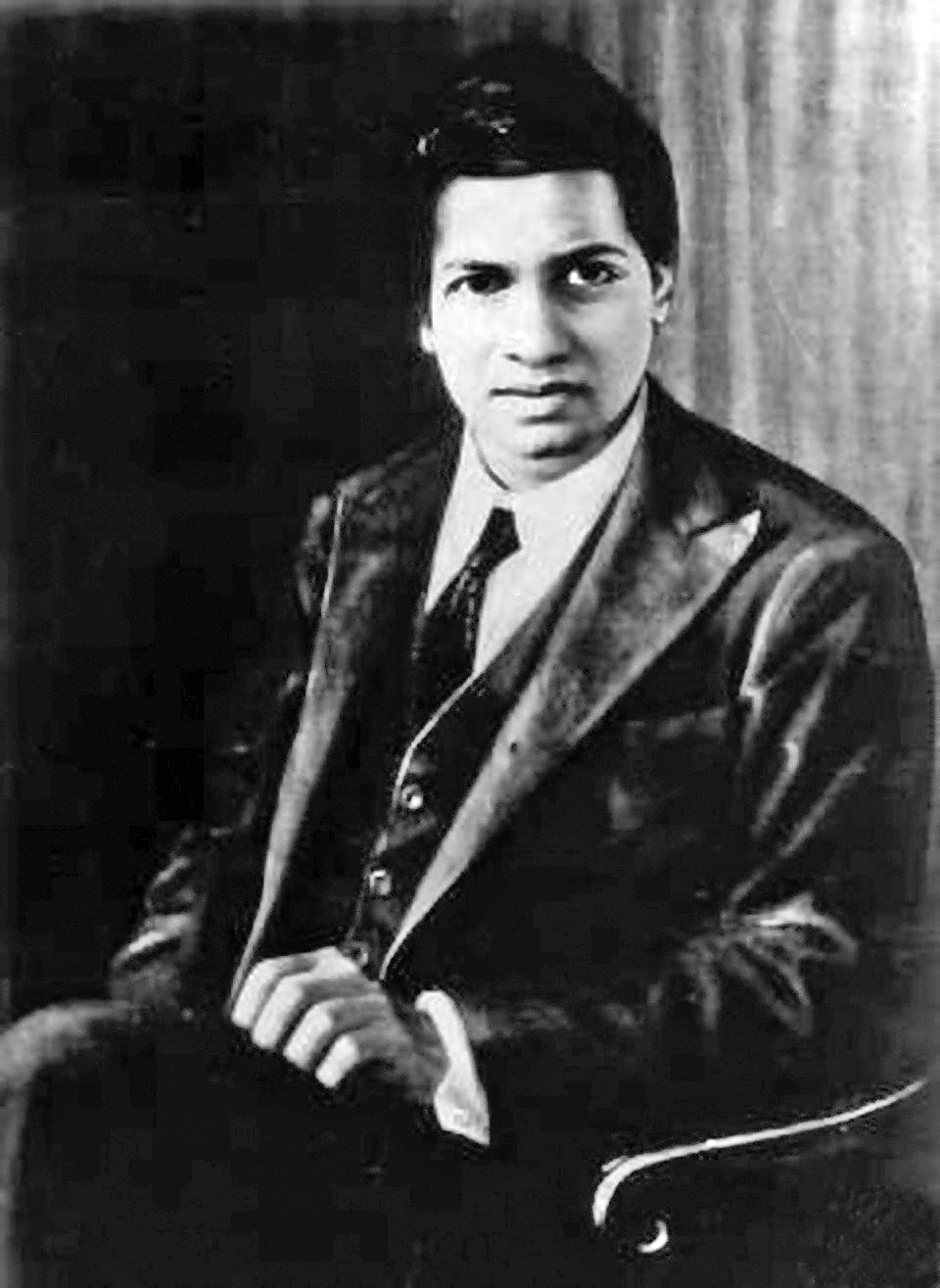
The Legacy of Srinivasa Ramanujan


Srinivasa Ramanujan: Going Strong at 125 (Krishnaswami Alladi, Editor - Notices of the AMS - Part I and Part II).

The Legacy of Srinivasa Ramanujan-An International Conference, University of Delhi, India

Friday, October 19, 2012

The Role of Research at Undergraduate Institutions

An excellent article by Robert Gavin, in "Academic Excellence - The role of research in the physical sciences at undergraduate institutions" (Michael P. Doyle, Editor - published in the year 2000 by Research Corporation - a foundation for the advancement of science). Even if the paper, which emphasizes the role of publishing in a research-based education, refers to physical sciences, the ideas in there are even better suitable for mathematical sciences, where there is not an excessive need for laboratories and equipment.
Straight to the point: "Publishing research articles, especially those done in collaboration with undergraduate students, should be expected, encouraged and supported both before and after the tenure decision".